

Systems | Development | Analytics | API | Testing

Top 10 Alternatives to Manual CSV Uploads for Data Teams in 2026

Every Monday morning, someone on your team downloads a report, opens it in Excel, cleans up the column headers, removes the blank rows, and uploads it to Salesforce or Snowflake. Then they do it again on Tuesday for a different source. By Friday, half their week is gone, and the dashboard is still showing last week's numbers.
How to Test AI Applications Manually: A Playbook for Hallucinations, Bias, and Non-Deterministic Outputs

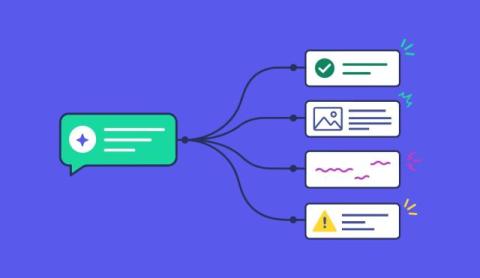
You have tested hundreds of features. You know the drill. Open the test case, write the preconditions, list the steps, fill in the expected result, run it, compare. Pass or fail. Move on. Then someone hands you an AI feature. A chatbot. A "summarize this ticket" button. A search box that answers in full sentences instead of returning a list of links. You open your test case template, you get to the "expected result" field, and you stop.

Maintenance Testing: Types, Challenges & Tools (2026)

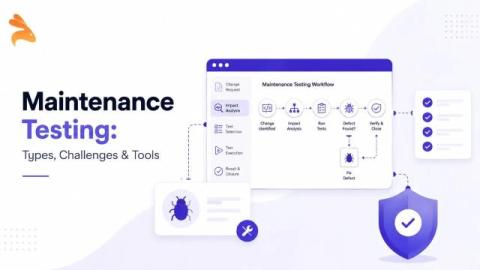
Last month, a two-line bug fix took down three unrelated features in a colleague’s app. The fix itself was correct — it patched a null check on a checkout API. Nobody re-ran the tests for the inventory service that depended on it, and by Monday, support tickets were stacking up. That gap is exactly what maintenance testing exists to close. Maintenance testing is the QA work you do after software ships — testing every bug fix, upgrade, patch, or migration to confirm nothing else broke.

Decoding the Data Fabric: From Regulation to Runtime

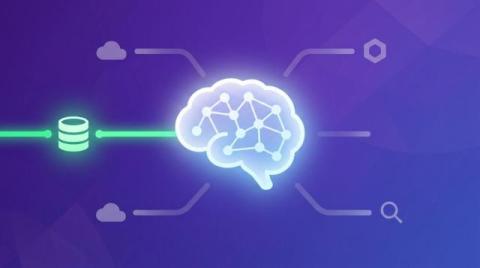
Spend enough time in the data management world, and you’ll quickly encounter a flood of terminology: semantic layers, knowledge graphs, unified metadata, governance fabrics, data meshes, and, of course, agentic AI. Most organizations know these aspects matter, yet many still struggle to understand how they fit together. The problem with traditional data architecture is that it is often treated as purely technical.

New in PHP 8.6: Narrowing the array_map vs foreach performance gap

With PHP 8.6, array_map gets about 10% faster in a synthetic benchmark — with zero changes to your code. My colleague Tim contributed the engine-level optimization that makes this possible. With PHP 8.6, the engine will automatically improve the following code: To turn array_map into a foreach loop as an engine optimization, PHP sees and executes this code as if it was written like this: This improves performance in a synthetic benchmark by about 10%.

7 Best Virtual CISO Providers for Operational Technology Environments in 2026

Operational technology environments need a different kind of security leadership. A traditional IT security program usually focuses on users, endpoints, cloud systems, applications, identity, and data. OT environments add another layer: physical processes, industrial control systems, plant uptime, safety constraints, legacy assets, engineering priorities, and production continuity.

8 Top Social Intelligence Tools for Consumer Insights in 2026

Consumers describe products with a candor no survey ever captures. They complain that a moisturizer pills under makeup, praise a headphone hinge that survived a toddler, and debate whether a snack's new recipe ruined it, all in public, all unprompted, and at a volume no research team could read in a lifetime. That running commentary is the largest focus group ever assembled, and it never adjourns.

Salesforce MCP: Is CRM Data Enough for Your AI Agent?

Connecting Salesforce to Claude via MCP is the advancement the SERP says it is. You authenticate once, your AI agent queries live CRM data, and you stop copying deal records into chat windows. For a Revenue Operations Manager who spent Q1 begging an admin to export pipeline snapshots, that matters.

News Analysis 2026: How AI Performance Testing Tools Are Transforming Software Quality

This summer, leading performance testing platforms have introduced a new wave of AI capabilities that are fundamentally changing how software teams validate application speed and reliability. Rather than incremental updates, these advances mark a step change: AI performance testing now enables faster test creation, greater accuracy, and wider accessibility across teams.