
De-risk your MuleSoft to WSO2 Integrator migration with WSO2's 100% open source migration tool that can automate 60% - 90% of the migration effort. The tool also provides a "migration assessment" of the percentage that can be migrated automatically, as well as an estimate of the effort required to manually migrate the remaining portion.
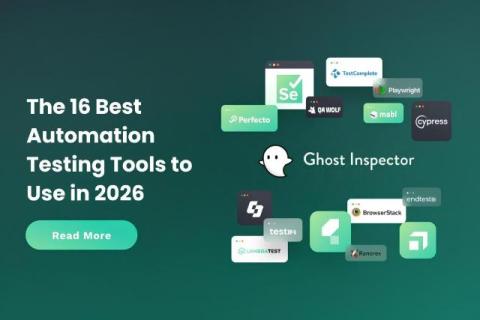
One of the most critical ways to validate real user journeys across any application is through end-to-end testing. Modern software stacks have grown so distributed that manual E2E testing grows increasingly hard to maintain and nearly impossible to scale. This is where automation in end-to-end testing helps engineering teams with the reliability, speed, and confidence during every release.
Non-crashing bugs don’t make your app crash, but they can ruin the user experience and hurt your app’s ratings. Fixing these issues is critical to keeping users happy. Here’s a quick rundown of the most common non-crashing bugs and how to address them.
October brings focused AI-native upgrades across Studio 10.4.0, TestCloud, and TestOps. Studio adds Agent-mode MCP, AWS Bedrock, AI failure analysis, automated code migration, and API auth inheritance. TestCloud delivers live device takeover, KRE session control, CLI heap sizing, private site testing, and richer Image Injection. TestOps adds an MCP server for LLM-driven management and a unified, real-time schedule console.
ETL pipelines extract, transform, and load data into destinations where teams can analyze and operationalize insights. This guide explains ETL fundamentals, core use cases, and how small teams and enterprises pick the right platform. We compare leading tools head-to-head and detail selection criteria. Integrate.io appears as our top pick for its balance of no-code simplicity and enterprise-grade governance, helping startups move fast without sprawl and large organizations standardize at scale.
Concurrency means running multiple tasks at the same time, and it’s a great way to ensure our apps stay responsive. Swift 5.5 introduced structured concurrency and the closely related concept of async/await to improve the management of asynchronous code, part of a wave of changes designed to ensure simpler code, improved error handling and automatic task lifecycle management.
Over the past few years, model providers have invested heavily in “guardrails”: safety layers around large language models that detect risky content, block some harmful queries, and make systems harder to jailbreak.
Do you find yourself questioning why popular apps sometimes crash or act unusually? Regardless of how hard software is crafted, bugs are a huge obstacle for teams, often resulting in unhappy users, lost revenue, or even product release delays. Most organizations are unable to track these bugs effectively and so they often use a mix of spreadsheets, or scattered scribbled notes and lose them in the shuffle—causing confusion, repeated work, and issues that aren’t resolved.