Systems | Development | Analytics | API | Testing

What "AI-Ready Data" Actually Means And How to Tell If Yours Is

You turned on an AI feature in your analytics tool. It surfaced an insight about your pipeline. You looked at it, paused, and closed the tab because you weren’t sure the number was right. AI-ready data would have made you forward it instead. It’s data that is clean, structured, and governed consistently enough that an AI model can reason about your metrics without a human translating or reconciling them first.

What Is Automation Testing, and How Does It Fit into a QA Workflow?

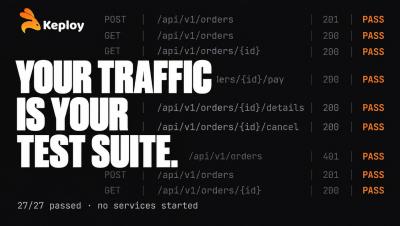
Manual testing is essential to quality assurance, but it doesn’t always scale with fast release cycles. Clicking through forms, checking user flows, and repeating the same regression tests before every release can quickly become a bottleneck. Automation testing takes repetitive checks off your QA team’s plate. Instead of manually checking the same flows again and again, teams use testing tools to run predefined tests automatically.

How to Override CodePush Defaults for Smooth OTA Updates

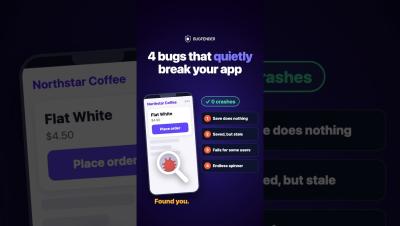
CodePush is a great way to ship over-the-air (OTA) updates, avoid app store approval delays, and roll out changes cautiously. Even though App Center has closed down, there are many options available to get started with CodePush. But some of the default settings can create unwanted behaviors, stopping updates from installing or making the app look like it’s crashed.

The Push and Pull between Validation and Creativity

In this episode, Petr Nohejl of Warhorse Studios joins us to explore one of game development’s most constant tensions: creativity versus validation. From technical constraints like file naming limits and tooling rules to the challenge of keeping large teams productive, Petr shares real-world examples of why validation systems exist—and why they can feel frustrating to developers pushing creative boundaries. Together, we unpack how this “push and pull” ultimately leads to better-performing pipelines, more scalable production, and stronger games.

Predictive Analytics in Healthcare: Use Cases, Models, Data Requirements & Implementation Playbook (2026)

A hospital might have years of EHR data, ICU records, staffing logs, claims history, and diagnostic reports in different systems. Yet it may still miss signs of patient deterioration before an ICU escalation. This gap is why predictive analytics in healthcare has shifted from experimental AI projects to a key strategy in 2026. Now, healthcare organizations use predictive models to identify sepsis risk earlier.

AI Inference for Mission-Critical Applications | Run AI Where Your Data Lives

What happens when your AI system stops responding in the middle of a critical decision? This demo shows how organizations run AI inference for real-world applications like pneumonia detection to: See how Cloudera AI Inference Service enables teams deploy and monitor multiple models with full control, predictable costs, and no dependency on external APIs, so mission-critical AI keeps working when it matters most.