Systems | Development | Analytics | API | Testing

Modern Software Development For Today's Systems & Applications



Multi-Factor Authentication in Healthcare: Balancing Security and Clinical Speed
Multi-factor authentication verifies user identity through two or more distinct authentication factor categories. These include something users know, possess, or inherently are, such as biometric characteristics. The multi-factor authentication healthcare organizations deploy protects electronic health records, remote access, and clinical applications. Healthcare authentication must accommodate shared workstations, frequent user changes, and time-sensitive clinical tasks.

Ep 96 | Leaving the Sandbox: AI In the Real World
The AI worked in the sandbox. Then it met the real world. David Hardoon learned that lesson during an ATM optimization project designed to improve cash-delivery routes. Once deployed, the system collided with traffic and unpredictable schedules, which are the realities that face the people doing the work. Recorded at *EVOLVE26* Singapore, this episode of The AI Forecast brings Paul Muller together with David Hardoon, Head of Advanced AI at Accenture, to explore why the human side of AI transformation can determine whether promising technology ever delivers value in production.

How Multi-Region Deployment Changes Load Testing Results
Multi-region deployment fundamentally changes performance expectations and testing priorities. Unlike single-region or multi-AZ setups, distributing workloads across continents introduces higher latency, longer failover times, and asynchronous replication. These realities require a new approach to load testing.
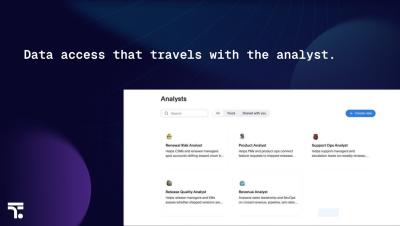
Governed End to End: How Spotter Analysts Control Data Access
Before any data leader deploys an AI analyst, they ask the same question: what can it touch? In this video, see how Spotter Analysts are governed end to end. What you’ll see: → How admins control which certified models a Spotter Analyst can read→ How data access travels with a shared analyst→ How “show work” traces every answer back to its source→ What governed end to end means in a production agentic analytics environment.
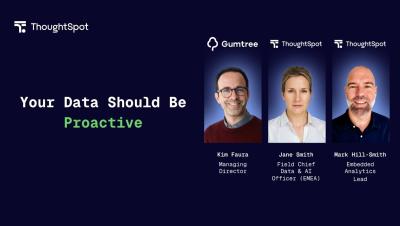
Why B2B Software Is Being Judged by B2C Standards
The bar for B2B software is being set by B2C experiences. In this clip, Kim Faura, former Managing Director at Gumtree, joins ThoughtSpot's Jane Smith and Mark Hill-Smith to talk about what this expectation shift means for product teams, and what it takes to close the gap between what B2B tools deliver today and what users now expect.
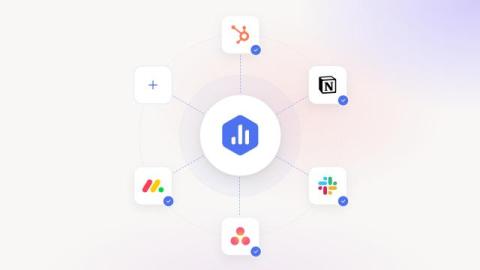
New: Give Your AI Analyst the Context to Explain Performance and Help You Take Action
You open your performance dashboard and notice that your sales pipeline has dropped 15% since last week. You can see the decline, but the numbers alone don’t explain what caused it. Maybe several deals were pushed into next quarter, your team lost a major opportunity, or a campaign generated fewer qualified leads than expected. The answers are likely somewhere in your CRM, project management tool, or conversations your team has been having.
TestComplete vs. Tricentis Tosca vs. Ranorex: Which test automation approach fits your team?
Test automation gets harder when the application portfolio stops looking like a modern web stack. Desktop clients, packaged systems, internal applications, and long-lived business software all create different requirements for how teams build, run, and maintain tests. In an AI-disrupted SDLC, the rest of the stack changes even faster, and the risk concentrated in those systems grows with it.

Construction ERP Explained: How Unified Software Streamlines Projects and Business Operations
Construction ERP or Enterprise Resource Planning Software is a business management platform tailored to the niche requirements of the construction industry. Its core purpose is to connect all primary construction-related activities including financial, operational, and administrative functions.
What quality engineering has always been missing
In September, Anthropic’s CEO argued that AI companies should deliberately slow the pace at which they improve their models, because advances are outrunning researchers’ ability to understand and control them. Sam Altman endorsed the idea within hours, and other leaders of frontier AI labs quickly echoed him. For QE teams, the pace problem is already here. AI-generated change is arriving faster than anyone can review, and it isn’t arriving clean.