Systems | Development | Analytics | API | Testing

Silent Failures: Why AI Code Breaks in Production

You ship a small “safe” change on Friday. The diff is tiny, the tests are green, and the AI assistant was confident. An hour after deploy, your on-call channel lights up. A downstream service is rejecting responses that look fine in code review. Now you’re rolling back and rewriting a fix that should have been obvious if you had real traffic in the loop. This isn’t a hypothetical.

Are Your APIs Ready for AI? Preparing Your Landscape for Intelligent Consumption

Getting APIs to work with AI has become one of the major themes in the API space recently. And that’s not surprising because APIs are at the core of an AI’s ability to reach out into the world, to get access to data and information, and to invoke commands and workflows to act. This was always what APIs were for, but in this article we will dive a little deeper what that evolution looks like, and what that means for API governance and management.

What is Semantic Caching?

When we think of a typical API, part of a production-ready setup generally includes a cache. This cache allows for similar requests to be served without having to do the entire roundtrip. But when it comes to AI applications powered by large language models, traditional caching falls short. This is because queries to an AI endpoint may look different in terms of how things are worded or phrased but actually mean the same thing semantically.

On-Prem Enterprise Alternatives to Cloud-Hosted AI Dev Tools | DreamFactory

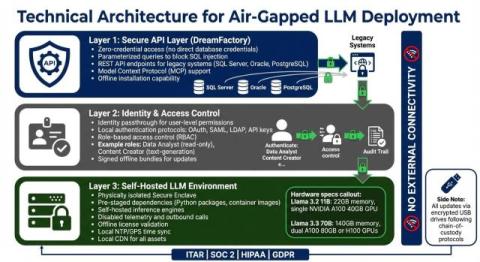
This guide explains how enterprises can replace cloud-hosted AI developer tools with secure, on-prem alternatives. It covers architectures, governance, and selection criteria that meet compliance and performance goals. You will learn how teams stand up private code assistants, model gateways, vector search, and policy controls behind the firewall.

Reusing test cases with Call to Test | Zephyr

SmartBear Zephyr is the Jira-native test management and automation platform that empowers your team to deliver better software,faster. By creating test cases, linking them to user stories and requirements, and monitoring progress all within Jira, you can unify your testing and development efforts. This short video demonstrates how to use a test case in Zephyr, known as the “Call to Test” capability. You’ll see how you can reference and reuse test cases across multiple Jira projects, no matter the test case type.

Security Testing Explained: Protecting Modern Applications And Apis

Security testing helps identify weaknesses in software before attackers can exploit them. It protects sensitive data, ensures system stability, and controls user access. With web, mobile, and API-based applications growing rapidly, security threats are increasing. Security testing helps teams detect risks early, prevent breaches, and meet compliance standards.

From APIs to Agentic Integration: Introducing Kong Context Mesh

The promise of agentic AI is clear: autonomous systems that can reason, plan, and act on your behalf. But there's a fundamental problem standing between that vision and enterprise reality: agents need context to make decisions, and that context lives scattered across your organization. Context is any data — or any abstraction that enables access to data — that an agent needs to do its job. Customer records in your CRM. Inventory levels behind your fulfillment APIs.