Systems | Development | Analytics | API | Testing

What Is Code Complexity & How To Measure It?

Have you ever stared at a section of code and felt lost, even though it seemed straightforward at first glance? Many developers have faced this challenge – where understanding, testing, or modifying code feels harder than it should. This difficulty is what we refer to as code complexity, a factor that directly affects software quality, maintainability, and performance.

Securely Connect Internal Services to WSO2 #bijira

Discover how enterprises can effortlessly connect their internal services to WSO2 Bijira using Tailscale — no complex VPNs or exposed systems needed! With end-to-end encrypted connectivity and full control over your private backends, Bijira makes it simple to manage secure connections while your developers stay focused on innovation and API management.

How DreamFactory's API Platform Transforms Cerner (Oracle Health) Data into Secure, LLM-Ready REST APIs

Healthcare organizations using Cerner Millennium (Oracle Health) struggle with integrating data trapped in complex databases and proprietary systems. Building custom APIs or integrations can be time-consuming, costly, and risky — especially when patient privacy and compliance are on the line.

Bad Actors are Harnessing the Power of AI-Is Your Identity Defense Ready?

The age of agentic AI introduces unprecedented risks. In the rapidly evolving landscape of artificial intelligence, agentic AI is emerging as a transformative force, capable of autonomous decision-making, learning, and interaction. These sophisticated AI systems are poised to revolutionize industries and daily life. Conversely, these same capabilities can be exploited by attackers to launch highly effective and scalable cyberattacks. The advancement of AI brings a critical imperative.

Zen Of Python: 19 Rules For Clean, Readable, And Elegant Code

The Zen of Python encapsulates the characteristics that led to Python being recognized as one of the most loved programming languages in the world. The principles, written by Tim Peters, are not meant to be absolute rules, but gentle reminders to consider in pursuit of writing beautiful, clean, and efficient code. They are all based on qualities that Python espouses: simplicity, clarity, and beauty.

How to Choose Real-Time Data Sync Tools for APIs

Real-time data synchronization is critical for businesses that rely on APIs to connect systems like CRMs, billing platforms, and inventory databases. It ensures that updates happen instantly, preventing issues like outdated information, missed opportunities, or operational inefficiencies. Here’s a quick breakdown of how to choose the right tool: Integration: Look for tools with built-in connectors for databases (e.g., SQL Server, MySQL) and cloud platforms (e.g., Snowflake, Amazon RDS).

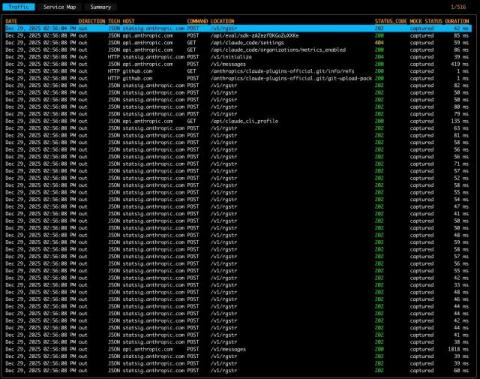
Part 1: Building a Production-Grade Traffic Capture and Replay System

A few years ago I was on call during the Super Bowl. At the time I was working for an observability vendor and one of our customers had an outage caused by a surge in user traffic. But our monitoring system didn’t have enough data to know what went wrong and I sat on a call for 2 hours painfully listening to them spinning up more servers and trying to catch up with the user load.

Mitmproxy vs Proxymock: Replaying Traffic for Realistic API Testing

Replaying traffic is a core tool in your toolbox when you need to reproduce a tricky bug or validate how your app behaves. Traffic replay is especially valuable for testing complex software applications that rely on APIs and microservices, where integration and functionality must be thoroughly validated.

Just Say No to AI: Why Our Content Will Remain Human-Authored

At WSO2, our content is grounded in original thinking and hard-earned lessons from building real enterprise systems with our products. We apply first principles to shape our perspective on our strategy and forward thinking. No model can replace this experience. AI is valuable when used by thoughtful authors, but alone it does not deliver meaningful value to our readers, customers, or community.