Systems | Development | Analytics | API | Testing

Five Habits That Cut IT Energy Waste, Without Spending More

Sustainability often gets treated like a policy or a pledge. But real progress comes from concrete operational habits that IT teams can adopt directly and measure over time. The urgency is growing. The International Energy Agency projects that global data center electricity consumption will more than double to around 945 TWh by 2030, with AI the most important driver of that growth. That makes efficiency not only a sustainability goal, but an operating requirement.

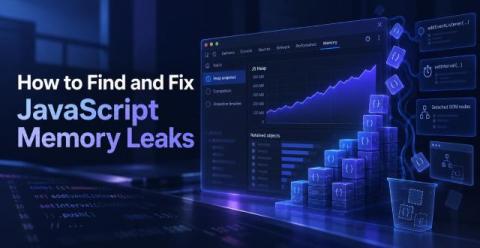
How to Find and Fix JavaScript Memory Leaks

Memory leaks are the bugs that really creep up on you. One minute your app is running perfectly, then suddenly it slows to a crawl or crashes. We don’t get a warning with memory leaks, so we need to prepare proactively and be ready when they hit. This means we need to: This guide is here for all of that.

How Developers Organize Web Resources During Software Testing and Development

Modern software development depends on far more than a code editor and source repository. Developers regularly move between documentation, API references, testing tools, staging environments, issue trackers, monitoring dashboards, browser tools, and deployment services. When these resources are scattered across open tabs, messages, bookmarks, and project notes, valuable time is lost simply finding the right page again. A small amount of organization can make both development and testing more efficient.

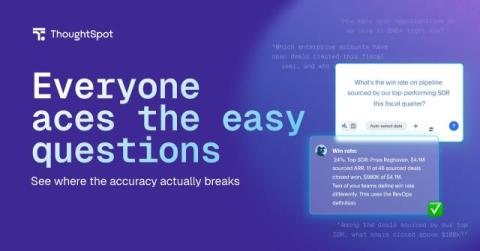
Which AI Analyst Holds Up Best for Your Hard Questions?

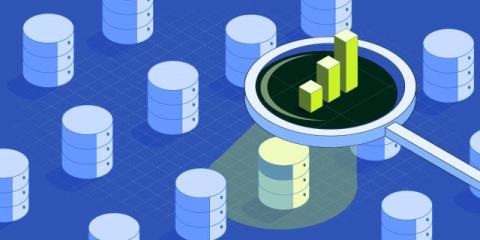
Analytics vendors claim their AI answers questions accurately, but almost none of them will show you how they checked. The standard move is a percentage with no denominator: "90%+ accuracy on internal benchmarks." No dataset you can download. No scoring method you can inspect. No competitor runs under the same conditions. You're asked to trust the grade without ever seeing the exam1 We ran the exam in public terms instead.

Tideways 2026.3 Release

This Release introduces AI Performance Insights, expanding the Tideways CLI with access to monitoring, exception tracking, Slow SQL, and trace data for agentic performance analysis. We added PHP 8.6 compatibility and improved trace views and instrumentation. We’ve also added a broad range of new framework- and ORM-specific bottleneck detections for Shopware, Magento, Laravel, Symfony, and Doctrine.

Your analytics platform is part of your attack surface

Analytics platforms are built to help organizations understand what their users are doing. Increasingly, they do much more than that: they connect behavioral data with customer context, power personalization, inform automated decisions, and provide intelligence to teams and AI systems. To do this well, analytics needs access to valuable data. That makes analytics more than a measurement layer. It makes analytics part of your security perimeter.

Start your AI agent testing with deterministic tooling

By now everyone is aware of the limitations inherent in generative AI and the AI agents that use it to complete their tasks, and the challenges involved in getting them enterprise quality. If you are planning to incorporate AI agents into your enterprise IT architecture, how are you planning to validate their quality and accuracy?

Sync Your Ometria Contacts Anywhere: Announcing the Integrate.io Ometria Connector

Push customer profiles, orders, products, and custom events into Ometria as they happen, and pull that same data back out into your warehouse or CRM, on schedule, with no engineering required. Ometria is a customer data and marketing platform built for retail and ecommerce brands. Marketing and CRM teams use it to unify customer profiles, track order history, and trigger lifecycle campaigns based on behavior like purchases, browsing, and loyalty status.

Third-Party Risk Assessments | How Confluent Helps You Move Faster with Confidence

Every organization that adopts a cloud platform takes on a shared responsibility: the assurance that its vendors are secure, compliant, and resilient. This is where third-party risk assessments (TPRAs) come in with a systematic evaluation of a vendor's security posture, operational resilience, and compliance standards. TPRAs are a cornerstone of modern security and procurement programs because they provide structured, verifiable evidence of a vendor's security posture.