

Systems | Development | Analytics | API | Testing

Building Property Risk Intelligence When Data Sources Disagree

Property risk intelligence is the property-level risk assessment a platform derives by reconciling observations from multiple third-party providers. It is more than a set of provider scores shown side by side. The challenge begins when those sources describe the same property differently. One may report a modeled flood probability, another a regulatory flood-zone designation, and another a physical characteristic that affects exposure.
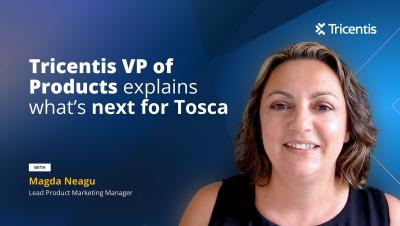
Tricentis' VP of Products explains what's next for Tosca

Tricentis’ VP of Products explains what’s next for Tosca 2026 has been a turning point for software testing, and for Tosca in particular. In this conversation, Magda Neagu, Lead Product Marketing Manager for Tosca, talks with David Landsberg, Tricentis’ VP of Products, about where Tosca is headed, how agentic AI is changing quality engineering, and what the testing world could look like a year from now.

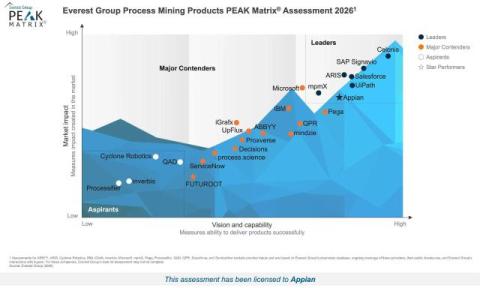
Appian Recognized as a Leader and Star Performer in the 2026 Everest Group Process Mining Products PEAK Matrix Assessment

When leaders lack visibility into how work gets done, they are forced to manage operations based on assumptions. This hides operational bottlenecks and leads employees to use manual workarounds. Organizations seek operational clarity to fix these inefficiencies, demanding solutions that provide process intelligence. Everest Group defines process mining as software that analyzes event logs to discover, monitor, and optimize processes.

"You Pay the Most for a Wrong Answer"-The Case for Semantic Layers

57% of executives report getting confidently wrong answers from their AI tools—answers that looked plausible and made it into real decisions. In this clip from Day 2 of our Semantic & Context Layer Series, Sonny Rivera, Jane Smith, and guests from Roche, Fabuwood, Snowflake, and dbt Labs break down what that problem actually costs.

How CIOs Can Manage Business Continuity with AI Ambitions

CIOs are being asked to accelerate AI adoption, manage cyber risk, and ensure their businesses remain resilient when facing disruption — a set of demands that leaves a whopping 91% of CIOs with moderate or high stress, according to a survey by cybersecurity platform SAFE. To maintain these responsibilities sustainably, modern enterprises must increasingly be built on a foundation of data that drives AI-powered business processes. For CIOs, that means new risks must be faced.

How iValue Differentiates Themselves in Cloudera Business #AI #news #techshort #EnterpriseTech

Buying tech is easy. Adopting it is where the real value happens. In this video, iValue explains their core differentiator in the Cloudera ecosystem: driving real business adoption across complex verticals and delivering results with over 1,000 ecosystem partners.

How to use Claude for data analysis and reporting (and its limitations)

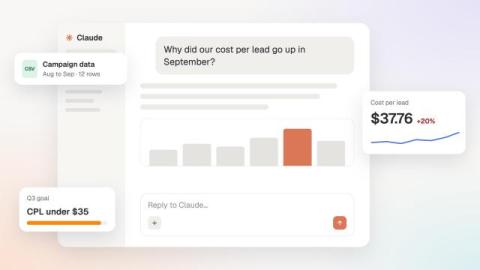
Claude has become the place where a lot of everyday work gets done, and analysis and reporting are no exception. In Databox’s recent survey, Using AI You Don’t Trust, 86% of business users said they reach for an AI tool like Claude or ChatGPT before any other tool for analytical work. Honestly, the pull toward these tools is easy to understand. Feed Claude a spreadsheet, and it can synthesize your data, spot trends, and turn raw numbers into written explanations and reports in minutes.

Native test management for Jira: What it is and when you need it

Native test management for Jira is a dedicated test management layer that runs inside Jira. It adds the capabilities Jira doesn’t provide on its own: reusable test cases, test cycles, execution history, requirements-to-test traceability, and release reporting. Jira doesn’t include built-in test management, so teams either adapt Jira work items to track tests or add a test management app from the Atlassian Marketplace.

Dissecting Rails Migrations: Anatomy, Rollbacks, and Errors (Rails 8.1)

A Rails migration is a timestamped Ruby class inheriting from ActiveRecord::Migration whose change method alters the database schema. bin/rails db:migrate runs each pending migration once, records its version in the schema_migrations table, and dumps the result to db/schema.rb. Rollbacks invert change; irreversible steps need up and down. On PostgreSQL and SQLite, each migration runs inside a transaction.