The question product and engineering teams ask before shipping an AI feature is usually simple: does it work? Is the model accurate enough? Are the outputs reasonable?
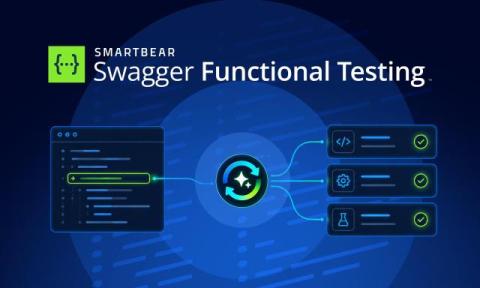
Imagine this scenario: your engineering team just pushed a spec update. A field was removed, an endpoint renamed, a new required parameter appeared on the payments API. Nobody told QA. Three days later, your regression suite lights up red across a dozen tests that have nothing to do with the actual bug. They’re failing simply because the tests are stale. Someone spends the next afternoon manually diffing the old spec against the new one, hunting for what changed, then rewriting test steps by hand.
As enterprise AI scales, traditional data architectures are reaching their limit. Workloads are becoming more distributed, data movement is accelerating, and tech leaders face growing pressure to justify AI spend while delivering real business impact. Chief Technology Officer Sergio Gago breaks down key findings from Cloudera’s latest global survey of enterprise architects, data architects, and cloud leaders.
How does our sales and revenue operation teams use Spotter, our agentic analyst, to instantly access and analyze their data using natural language? In this video, you'll see how Spotter makes data interrogation easy and reliable. Learn how to: Explore Data Sets: Quickly understand what data you have access to, where it is pulling from, and get immediate examples of what you can ask. Get Instant Answers: Type a natural language question (like "What's the booked ACV this quarter by region?") and instantly receive easy-to-read charts and deep analyses.
Our own sales team was losing up to 2 hours per account just switching between tools. Here's how they got that time back. In this video, our SVP of Revenue Strategy walks through how her team built a single sales hub with AgentSpot, pulling data from ThoughtSpot, Salesforce, Gong, and external intent signals into one workflow. What you'll see: What's hot in your territory: the accounts showing real buying intent, based on search trends and ICP fit.
Let’s be real—clients don’t care about how much effort you put in. They only care about results. If you’re not delivering clear, real-time performance insights with zero fluff, you risk losing their trust—and their business. That’s why a good client dashboard software is a necessity. It can take the guesswork out of reporting, and give your clients a crystal-clear view of their campaigns without endless emails or confusing spreadsheets.
Oil and gas IT budgets in 2026 lean toward modernization, not headcount. Drilling data, old SCADA systems, legacy ERP - none of it talks to AI tools without real software work behind the scenes. Cybersecurity rules tightened across the EU and US this year, too. Internal teams rarely cover seismic interpretation, OT security and cloud migration all at once. That gap is why operators keep hiring specialized firms instead of growing every skill in-house.
Write pipeline output directly into Databricks tables, with staging and load handled automatically, so lakehouse teams skip the intermediate warehouse hop and get data where it belongs, without maintaining a manual copy step. Databricks has become the default lakehouse for teams that need one place to store, process, and query data at scale, from raw event logs to curated tables used for BI and machine learning.
Cloud testing offers a practical path for reducing the environmental impact of software development. By eliminating the need for dedicated physical hardware, teams can cut energy consumption and electronic waste. Virtualized environments scale up only when needed, replacing racks of underused servers with efficient, on-demand resources.
Until recently, performance testing workflows meant complex scripting, manual maintenance, and slow feedback. Now, the adoption of AI chatbots in QA and DevOps is prompting a fundamental shift. Teams using AI-driven testing tools are seeing significant reductions in test cycle times and improvements in defect detection. These are not incremental improvements, but shifts that are redefining benchmarks for speed and coverage.