Systems | Development | Analytics | API | Testing

10 Signs You've Outgrown QuickBooks Inventory-and What to Do Next

As a business grows, inventory management becomes more complicated than simply knowing what is in stock. More products, additional sales channels, larger order volumes, and multiple storage locations can quickly turn a once-simple process into an operational challenge. QuickBooks Online offers useful built-in inventory management features for small businesses. It can help track inventory quantities, monitor stock levels, manage purchase orders, calculate inventory value, and keep accounting connected with everyday transactions.

Building a Data Warehouse with the Astera AI Agent: From Prompt to Insight

Establishing a data warehousing system that meets all your business intelligence targets is by no means an easy task. It traditionally involves profiling source systems, designing a dimensional model by hand, writing the DDL to deploy it, building the load pipelines, and scheduling them to run, work that can take weeks. Astera's manual, step-by-step approach to this is covered in Building a Data Warehouse – A Step by Step Approach.

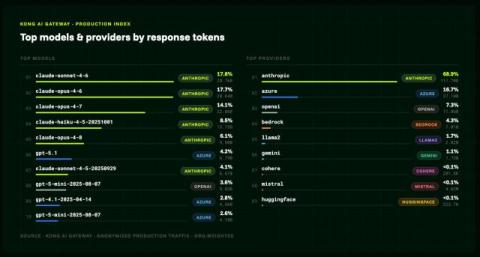
A New Dawn: Enterprise AI's Shadow - Trillions of Tokens, Zero Governance

You Can't Govern What You Can't See A decade ago, cloud and API sprawl got ahead of governance, and enterprises spent years trying to account for costs they'd never tracked. Today, we're seeing the same pattern around AI, with hundreds of customers proxying traffic via Kong AI Gateway, which includes LLM, MCP, and agent connectivity. *AI spending will reach $2.59 trillion in 2026.* I regularly like to share what we're seeing in production at Kong.

What Are AI Agents Actually Doing When They Talk to Each Other?

You've probably seen the demos. An AI model kicks off a task, hands pieces of it to other AI models, and somehow the whole thing gets done. Emails drafted, code reviewed, reports summarized — all without a human in the loop. While a single agent doing one thing is impressive, the true paradigm shift occurs when transitioning from single-agent to multi-agent AI systems. It looks like magic. It isn't.

Agentic Engineering and the Agentic Software Factory for Real-Time Data Products

Software workloads that process large volumes of real-time data are becoming common. Decades working in this domain has taught me that building and operating reliable and maintainable real-time data products requires permissive access to the context of the environment. This article explains how to approach agentic engineering and apply it when building real-time data products inside an agentic software factory.

The mobile gap: Vision-based testing catches what code reviews miss

The pull request looked perfect. Two approvals, clean diff, all checks green. The team shipped it Thursday afternoon. By Friday morning, support tickets were coming in. On a popular mid-range Android device, the new checkout button rendered behind a promotional banner: visually present but physically untappable. Every reviewer read that code, yet none of them could have caught it, because the defect was never visible in the diff. It only ever appeared on the device.

Perfecto AI Desktop Testing Brings Native Apps Into Your Automation Strategy

For years, native desktop applications have been the part of your portfolio that automation forgot. Your team automates web and mobile with confidence. Then there's the.NET client over a mainframe, the EPIC workflow, the proprietary trading terminal, and the packaged Windows app that breaks every time someone moves a button. These applications run your most regulated, high-stakes processes, and they stay locked in manual testing year after year. Perfecto AI Desktop Testing changes that.

Cut AI coding defects by 33% #mcpserver #aicoding #aiagents #grafana #aitools

We spend thousands of dollars "token maxing" and running endless debugging cycles just to walk our LLMs through a problem. But is the AI actually failing, or are we just withholding the right environment? Giving your AI assistant its own sandbox to test hypotheses might just be the missing link in your development workflow.

Open Source vs Commercial Load Testing Tools: A 2026 Comparison for Enterprise Decision Makers

Selecting load testing tools is rarely a matter of picking the most feature-rich option. Instead, it’s about finding the right fit for your team’s skills, workflows, and performance goals. Open source solutions act like a Swiss Army knife: versatile, adaptable, and packed with options for those who know how to use them. Commercial platforms, by contrast, function more like a precision instrument: focused, reliable, and designed to deliver results with minimal friction.