Systems | Development | Analytics | API | Testing

What is Sauce Labs AURA? The AI-Unified Release Assurance Platform

AURA: AI-Unified Release Assurance is the world's only closed-loop agentic platform that authors, runs, and analyzes tests with human oversight, informed by 8.7B+ test executions. It takes you from business intent to production confidence at AI speed. From the founders of Selenium and Appium.

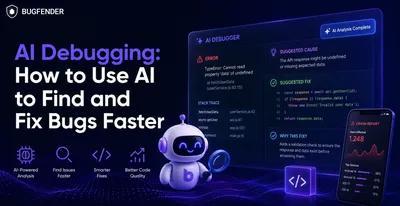
AI Debugging: How to Use AI to Find and Fix Bugs Faster

At its simplest, AI debugging automates repetitive coding tasks like searching logs, reading stack traces and comparing sessions. But good AI debugging is a much more challenging concept that relies on focused context, runtime evidence and structured investigation paths. In this post we’ll show you how to debug with AI, not just productively but also responsibly. Let’s get into it.

Unlocking the Power of Trusted Data Intelligence: Amazon Quick Meets Qlik MCP Server

When was the last time you made a major business decision and were completely certain the data behind it was accurate, complete, and trusted? For most organizations, that certainty is less common than it should be. Qlik and Amazon Quick together solve one of the biggest obstacles to AI adoption: knowing whether you can trust the output.

Advancing ThoughtSpot's Commitment to Apache Ossie (Incubating), the Next Chapter of OSI

When the Open Semantic Interchange (OSI) initiative launched last year, it set out to solve a problem every data leader recognizes: the same business metric gets defined a dozen different ways across a company's BI tools, warehouses, and now, AI agents. "Monthly active users" in the CRM rarely matches "monthly active users" in the warehouse, and every new AI copilot added to the stack makes the gap more visible, not less. That initiative has just taken its most consequential step yet.

Use of AI in Software Development

Quick application integrity check: can your quality strategy survive the tsunami of code coming its way? AI is accelerating development, increasing code abstraction, and multiplying the volume of software teams need to validate. But existing QA approaches weren't built for this level of speed and scale. Application integrity closes the growing gap between what teams build and what they can verify, providing continuous assurance that software works as intended.

Building Enterprise-Grade AI Agents: From Prototype to Production

Everyone can build an AI agent today. The hard part isn't getting an agent to answer a question or complete a demo. It's deploying one that employees trust, security teams approve, and operations teams can manage at scale. That's where many AI projects stall. As organizations move beyond experimentation, the conversation shifts from prompt engineering to production readiness. Can the agent safely access business data? Can you evaluate changes before deployment? Can you understand why it made a decision?

Why Trusted Data Is the New AI Moat (w+ Rick Kranz from the AI Marketing AUtomation Lab)

Rick Kranz has built over 100 AI automations for his community and clients — he has no reason to defend Databox. But when he tried to run his AI analysis without the Databox MCP, it just stopped working. In this episode, Rick and Pete break down exactly why: the semantic layer, the metric definitions, and the standardized math that make an AI's answer trustworthy instead of a guess. If you've ever wondered why connecting five random MCP servers to Claude doesn't give you the same results as a purpose-built data layer, this is the episode.

How agentic QA cuts the test maintenance tax

Every QA budget has a line item for building test coverage, but 30–50% of that automation budget ends up spent on maintenance instead of new tests. That disparity stays invisible until a release goes out, the application shifts underneath the tests, and the QA team spends the next three days rewriting broken scripts instead of finding new bugs.

Beyond the Budget: The AI Decisions That Only Humans Can Make

Earlier this month I spent time with a group of senior executives discussing the economics of AI: what it actually costs, where the value is and is not materialising, and what the organisations that are getting returns are doing differently from the ones that are not. That conversation encapsulates why this series is called Beyond the Budget. Not because cost does not matter. It does. But because the budget is where the consequences show up.