Systems | Development | Analytics | API | Testing

The Next Enterprise Cloud Is Built for Small Software

The most useful piece of software we came across last quarter never left someone's laptop. An operations lead at one of our enterprise clients built herself an inventory reconciliation dashboard. No ticket, no sprint, no engineer involved. She described the workflow to an AI agent one evening and had something working by the next morning. A problem her team had been raising for over a year, solved by someone who has never written production code in her life.


How can AI agents reduce operational costs throughout the organization?

‍ Every CFO has looked at the headcount report and asked the same question. Why does it take twelve people and four tools to do something that feels, on paper, like it should take three? The honest answer is usually not laziness or bloat. It is a coordination tax. Someone has to read an email, decide what it means, open three other systems to check context, type a response, update a tracker, and notify two other teams. None of that is hard work.

Why AI Sovereignty Is an Operational Problem

AI sovereignty has become one of those phrases that sounds precise until someone asks what it actually means. For one federal agency, sovereignty means keeping sensitive data inside accredited boundaries. For another, it means running open-weight models in a FedRAMP-authorized private cloud. In defense and intelligence settings, it may mean operating inside an air-gapped environment at IL5 or IL6.

The Missing Piece of Your AI Strategy: Data at the Edge

Companies everywhere are rushing to deploy AI models to outpace the competition, but they are running headfirst into a brutal reality check: an AI model is only as brilliant as the data feeding it, and most data simply isn't AI-ready. The high-value, real-time data required to power these models doesn’t live in a pristine, pre-formatted cloud data warehouse. It is generated in the physical world on factory floors, inside hospital rooms, and at point-of-sale terminals.

AI Is Only as Good as Your Property Data: Preparing Data Foundations for AI Initiatives

PropTech teams sometimes plan an AI initiative by starting with the wrong question. They ask which model to use before they can answer a more basic one: is our property data ready for any of it? AI pilots may stall not because the models underperform, but because the property data feeding them is fragmented across MLS feeds, PMS records, and CRM exports, duplicated across sources, and missing the ownership, tax, and location context a model needs to reason.

Real Rental Data & AI-Ready Infrastructure - With Jonas Bordo, Dwellsy | The Innovation Blueprint Podcast

For as long as there’s been a rental market, there’s been a version of this question: is the number on the listing actually the number? Ask anyone who’s built a pricing model, a forecasting tool, or a CPI estimate on top of rental data, and you’ll get the same answer — probably not, and there was never a good way to check.

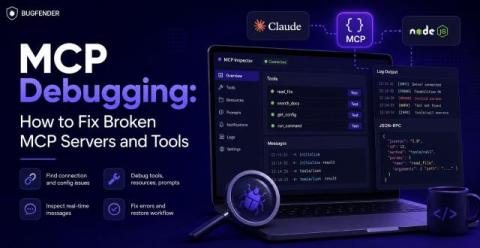
MCP Debugging: How to Fix Broken MCP Servers and Tools

Model Context Protocol allows AI models like Claude to communicate with the outside world. But MCP debugging has been one of our steepest learning curves at Bugfender. Several different layers need to work together at the same time and if one thing breaks, it can scupper the whole workflow. That’s why we’re here today. To pass on hard-won knowledge, so you can jump the curve.

IoT Medical Device Integration: Technical Guide to Devices, Gateways & EHR Systems (2026)

The Internet of Medical Things (IoMT) is growing faster than ever. According to 2026 data from The Business Research Company, the global IoMT market has reached over $124 billion this year and is on track to hit nearly $300 billion by 2030. This growth is happening because healthcare is moving outside hospital walls and into patients' homes through remote monitoring. But for engineering teams, connecting these devices is a massive headache.