Systems | Development | Analytics | API | Testing

From iPaaS to Context Mesh: The Architecture Shift Agentic AI Demands

If you've been around long enough to remember when iPaaS was the answer to everything, you know the pattern. New paradigms arrive. Someone realizes that wiring it into existing infrastructure is harder than the demos suggested. An integration layer gets built. That layer slowly becomes load-bearing. Eventually, the integration layer becomes the bottleneck. We're at that moment again — except this time, the new paradigm is agentic AI, and the bottleneck is forming faster than usual.

Why Your AI Agents Keep Failing (Hint: It's Not the Model)

You swapped in a better model. You fine-tuned it. You threw more tokens at the problem. And still — your agents hallucinate, break under load, and deliver answers that were accurate about three hours ago. The model isn't the problem. Gartner recently flagged that up to 40% of enterprise agentic AI initiatives are at risk of failure. Executives see that number and immediately audit their LLM provider. Their infrastructure team. Their prompts.

The Reason Your Tests Are Flaky And How to Fix It Using Keploy

Ever had an API test fail even though nothing in your code actually changed? That's a noisy field problem and it's one of the most common causes of flaky tests. In this video, we break down: If you're tired of re-running tests just because a timestamp didn't match, this one's for you. Timestamps.

Why Integration and MCP Are the New Foundation of Your Agentic AI Strategy

If you've been following the agentic AI wave, you've probably noticed that the conversation tends to center on the agents themselves: which LLM to use, which orchestration framework to pick, which use cases to tackle first. But a growing body of analyst research is pointing to a different bottleneck, one that's hiding in plain sight: integration. Forrester's David Mooter argues that integration must sit at the center of your AI strategy — not as plumbing, but as a strategic capability.

Why traditional test metrics fall short in the AI era

Most QA teams already track the basic metrics: how many tests ran, how many passed, how much coverage exists, and how many defects turned up. Those numbers still matter, and engineering leaders will keep asking for them. The real challenge is turning those numbers into decisions, and that gets harder as AI-assisted development speeds up the volume, frequency, and complexity of software change.

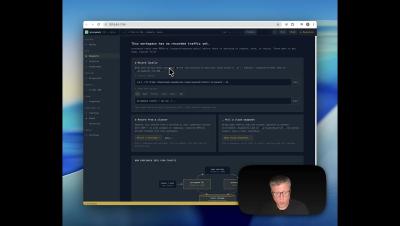
Instant Kubernetes Observability with Proxymock #speedscale #kubernetes #ebpf #devops #cloudnative

Learn how to get instant observability into your Kubernetes cluster by installing the Speedscale operator and proxymock tool. In this step-by-step tutorial, we walk you through setting up the operator to capture live network traffic (including encrypted traffic, API calls, and database calls) without complex instrumentation or manual configuration.

How to automate API regression tests without code | SmartBear Swagger Functional Testing

Learn how to automate API regression tests without writing code. In this tutorial, you'll use an OpenAPI specification to build automated API tests with SmartBear Swagger Functional Testing using a visual, low-code workflow. What this solves.

Local Previews and Agent-Driven Authoring for Your Konnect Dev Portal

The new Konnect Dev Portal Toolkit extension for Visual Studio Code gives you a live, portal-accurate preview of your content right beside the file you are editing. You watch a page take shape exactly as it will appear to your developers, as you type, without ever leaving your local editor.