Systems | Development | Analytics | API | Testing

How to scale AI test automation without losing test visibility

According to SmartBear’s Closing the AI Software Quality Gap study, 93% of teams are already using AI to generate code. The same study found that 60% expect AI to produce nearly half of all code within the next year. This shift in development velocity is already impacting software testing and quality. Most teams say application quality is suffering, and 60% have experienced quality issues in the past year because development is moving faster than testing can keep up.

From Smart Recommendations to Slow Responses: Performance Engineering Challenges in AI-Driven Travel

There is a moment most travel platform teams are now experiencing for the first time. The AI-powered booking assistant is live. The conversational search feature is generating rave reviews from product managers. The personalised itinerary engine is pulling data from a dozen microservices in real time. And then peak season arrives. Response times climb. The AI layer starts queuing. The booking funnel drops. Users abandon. And the engineering team realises something uncomfortable.

DataNative Real Estate Platforms: How to Bake Analytics into Your Product from Day One

Real estate products generate enormous amounts of data — listings, transactions, user behavior, ownership records, market signals — and most platforms use a fraction of it. Not because the data isn’t there, but because analytics was never designed into the product.

What is MCP (Model Context Protocol)?

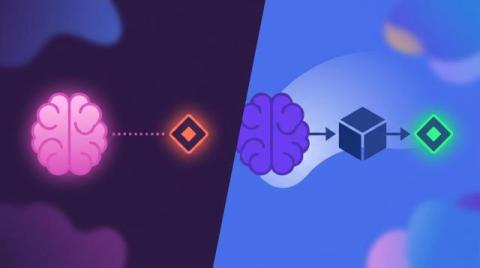
MCP (Model Context Protocol) is an open standard that lets AI agents connect to external tools and data sources in a consistent, secure way. We can think of the MCP as a USB-C port for AI agents. This open protocol from Anthropic (the guys who built the Claude chatbot) enables AI applications to plug into external tools without any custom glue code.

Enterprise AI Security with ClearML: A Complete Series Summary

Over a seven-part series of posts and videos, ClearML’s Enterprise AI Security series covered every layer of securing an AI platform in production, from who gets in to what gets recorded. This post brings it all together in one place: what each layer does, why it matters, and how the layers connect.

Why Static Analysis Is Still Essential in the Age of Claude AI Cybersecurity Scanning

It’s hard to keep up with how fast artificial intelligence is transforming organizations’ approach software security. Models like Claude Mythos Preview bring impressive new capabilities to the market, offering dynamic threat detection and adaptive learning. These advancements lead many engineering leaders to ask a critical question: Do we still need static analysis? The short answer is a definitive yes.

Terraform Cloud - A Complete Overview, Key Features & Getting Started Guide

Over the past decade, the way organizations manage infrastructure has fundamentally changed. Static, manually provisioned resources have given way to dynamic, code-driven environments. Today, Infrastructure as Code (IaC) is the standard approach - but running it securely and efficiently at scale brings its own set of challenges: state management, access control, policy enforcement, and configuration drift are just a few.

Reality vs. requirements: How to align tests with real user behavior

Not long ago, the answer to who writes tests was simple: the quality assurance (QA) engineer does. They sat downstream of development, received a build, and translated requirements into scripts. It was a defined role with a defined output. That clarity is gone. In 2026, the person or system responsible for test creation might be a business analyst (BA) mapping out a customer journey, an AI agent expanding test coverage overnight, or a QA engineer who hasn’t written a traditional script in months.