Systems | Development | Analytics | API | Testing

eBPF: Preventing Garbage HTTP Payloads When Reading Kernel Scatter-Gather Buffers

Recently someone on our team opened a traffic snapshot and found an HTTP request that was captured with our eBPF capture agent, nettap. Our protocol dissector parsed most of the response correctly, but that correctness ended once the response headers were processed. What they ended up with was a recording of an HTTP request/response where the response body was just an incorrect collection of garbage binary data when it should have been JSON text.

Playwright API Testing: A Complete Guide (2026)

Playwright is a browser automation framework that also ships a built-in HTTP client for API testing. That HTTP client, called APIRequestContext, lets you send requests and assert on responses directly inside a Playwright test – no browser, no separate tool. If your team already uses Playwright for end-to-end browser tests, the API layer requires no separate testing framework. It runs inside the same suite, the same CI job, the same configuration.

Updating access timestamps without wrecking the database

When you want to know the last time some user was seen or some resource was accessed/viewed, then usually you reach to a timestamp column and update this to the current time whenever it’s seen or accessed. You may have written this kind of SQL statement (or the equivalent) in your ORM yourself a few times: It looks innocent, but even on reasonably small tables, this can cause slow UPDATE statements regularly.

Ably Pub/Sub now supports React Native push notifications

Until now, sending push notifications to a React Native app with Ably meant registering devices manually through the push admin API, usually from a server. The new plugin moves activation where it belongs: onto the device. We've added first class support for React Native apps receiving push notifications through the Ably PubSub JavaScript SDK.

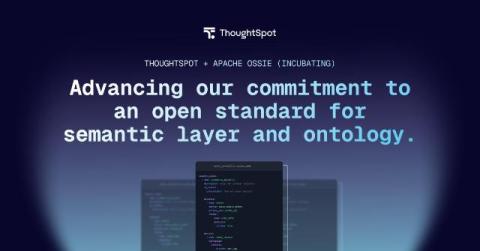
Advancing ThoughtSpot's Commitment to Apache Ossie (Incubating), the Next Chapter of OSI

When the Open Semantic Interchange (OSI) initiative launched last year, it set out to solve a problem every data leader recognizes: the same business metric gets defined a dozen different ways across a company's BI tools, warehouses, and now, AI agents. "Monthly active users" in the CRM rarely matches "monthly active users" in the warehouse, and every new AI copilot added to the stack makes the gap more visible, not less. That initiative has just taken its most consequential step yet.

Use of AI in Software Development

Quick application integrity check: can your quality strategy survive the tsunami of code coming its way? AI is accelerating development, increasing code abstraction, and multiplying the volume of software teams need to validate. But existing QA approaches weren't built for this level of speed and scale. Application integrity closes the growing gap between what teams build and what they can verify, providing continuous assurance that software works as intended.

Building Enterprise-Grade AI Agents: From Prototype to Production

Everyone can build an AI agent today. The hard part isn't getting an agent to answer a question or complete a demo. It's deploying one that employees trust, security teams approve, and operations teams can manage at scale. That's where many AI projects stall. As organizations move beyond experimentation, the conversation shifts from prompt engineering to production readiness. Can the agent safely access business data? Can you evaluate changes before deployment? Can you understand why it made a decision?

Why Trusted Data Is the New AI Moat (w+ Rick Kranz from the AI Marketing AUtomation Lab)

Rick Kranz has built over 100 AI automations for his community and clients — he has no reason to defend Databox. But when he tried to run his AI analysis without the Databox MCP, it just stopped working. In this episode, Rick and Pete break down exactly why: the semantic layer, the metric definitions, and the standardized math that make an AI's answer trustworthy instead of a guess. If you've ever wondered why connecting five random MCP servers to Claude doesn't give you the same results as a purpose-built data layer, this is the episode.